Simple Steps for Homeowners on How to Move a Gun Safe
Figuring out how to move a gun safe requires careful planning and the right equipment. These heavy storage containers provide excellent security for your valuables, and if you’re planning a business relocation, professional commercial moving services can help manage large-scale heavy item transport. However, their massive weight makes relocation incredibly challenging for the average homeowner. One wrong step can easily cause severe property damage or serious personal injury.
Our comprehensive guide explores the best techniques for managing this demanding physical task. We will discuss essential preparations, necessary tools, and critical safety measures. Relocating such a massive object is never a simple weekend project. It demands intense focus, tremendous physical strength, and a clear understanding of basic physics.
Throughout this detailed resource, you will discover practical solutions for overcoming common transportation obstacles. We cover everything from navigating tight residential corners to managing steep indoor staircases. You can refer back to this post/how-to-move-a-gun-safe whenever you need a reliable reference for your upcoming heavy equipment relocation project.
Essential Preparations Before the Big Day
The very first step involves completely emptying the heavy container. Remove all firearms, ammunition boxes, and adjustable shelving units from the interior compartment. This crucial action significantly reduces the total payload weight. A lighter container is much easier to balance and maneuver across your delicate residential flooring surfaces.
Once the interior is completely empty, securely lock the heavy steel door. A swinging door can instantly shift the center of gravity during transit. Wrap the entire exterior with thick protective blankets. Secure these thick layers tightly using strong packing tape or durable plastic stretch wrap.
You must also carefully measure the dimensions of the steel container. Compare these measurements against every single doorway, hallway, and sharp corner along your planned exit route. Clear all rugs, small furniture, and loose debris from the path to prevent dangerous tripping hazards during the critical lifting phase.
Simple Steps for Homeowners on How to Move a Gun Safe
Reviewing Simple Steps for Homeowners on How to Move a Gun Safe will prepare you for the intense physical labor ahead. First, you must tilt the massive steel container slightly backward. Have your strongest helpers maintain this tilted position while another person slides the heavy appliance dolly underneath.
Once the container rests completely on the dolly platform, secure it tightly using heavy duty ratchet straps. You want to eliminate any potential shifting or sliding during transport. The strap mechanism must lock firmly into place before you attempt to roll the loaded dolly across the room.
Communication remains absolutely vital while rolling the loaded dolly. The designated leader should clearly call out every single movement, turn, and expected stop. All participating helpers must listen closely and follow these verbal instructions. This synchronized teamwork prevents dangerous accidents and keeps the heavy load perfectly balanced.
Essential Tools Required for the Heavy Lift
Gathering the proper equipment is non negotiable when dealing with extreme residential weights. Standard household dollies will instantly collapse under the immense pressure. You must rent or purchase specialized heavy duty moving equipment. Using the correct gear protects your physical health and preserves your home interior perfectly.
Here is a quick list of mandatory equipment for the job:
- Heavy duty appliance dolly with secure strapping mechanisms
- Multiple thick moving blankets to prevent exterior surface scratches
- High capacity ratchet straps rated for at least 800 pounds
- Sturdy work gloves with excellent rubber grip material
- Steel toe boots to protect your vulnerable feet
Never substitute these specialized tools with cheap residential alternatives. A flimsy strap snapping under tension can cause a catastrophic accident. Investing in high quality equipment or renting professional grade gear is the only acceptable way to ensure a smooth and totally incident free relocation process.
Navigating Tight Hallways and Narrow Corners
Moving the loaded dolly through narrow residential hallways requires incredible patience. You must maintain a slow and steady walking pace at all times. The person controlling the dolly handles must keep the entire load tilted back at a consistent and comfortable angle for optimal weight distribution.
When approaching a sharp corner, take a brief moment to pause and assess the turning radius. Spotters should guide the front edges of the steel container to prevent terrible drywall damage. Make wide turns whenever possible to keep the heavy wheels from catching on the doorframes.
If the dolly wheels sink into thick carpet, you will need to apply significantly more pushing force. Helpers should gently push the front of the steel container while the operator pulls backward. This combined pushing and pulling effort helps the small wheels roll smoothly over the soft fibers.
Tackling Staircases Safely and Securely
Transporting a massive steel vault down a flight of stairs is incredibly dangerous. The operator must stand above the dolly, holding the handles tightly. Helpers must stand below the load to provide essential counter pressure. Everyone must move together exactly one single step at a time.
Never allow the loaded dolly to build up dangerous downward momentum. The helpers positioned below the load are responsible for gently guiding the wheels down to the next wooden tread. The operator above must lean backward to prevent the heavy unit from tipping forward prematurely.
If you are moving the container up the stairs, the physical effort increases exponentially. The team must pull the dolly up over every single step edge. This strenuous process requires frequent rest breaks to prevent total muscle exhaustion and potentially devastating slips on the staircase.
Loading the Container Onto the Moving Truck
Getting the massive unit into your transport vehicle requires a durable mechanical lift gate or an extremely sturdy loading ramp. Standard wooden planks will break instantly under the extreme weight. You must approach the loading ramp with extreme caution and a well coordinated team strategy.
Follow these exact steps when loading the truck:
- Align the dolly perfectly straight with the metal loading ramp
- Maintain a strong grip on the dolly handles at all times
- Have three helpers firmly push the container from behind
- Walk up the ramp with slow and deliberate footsteps
- Stop immediately if anyone loses their footing
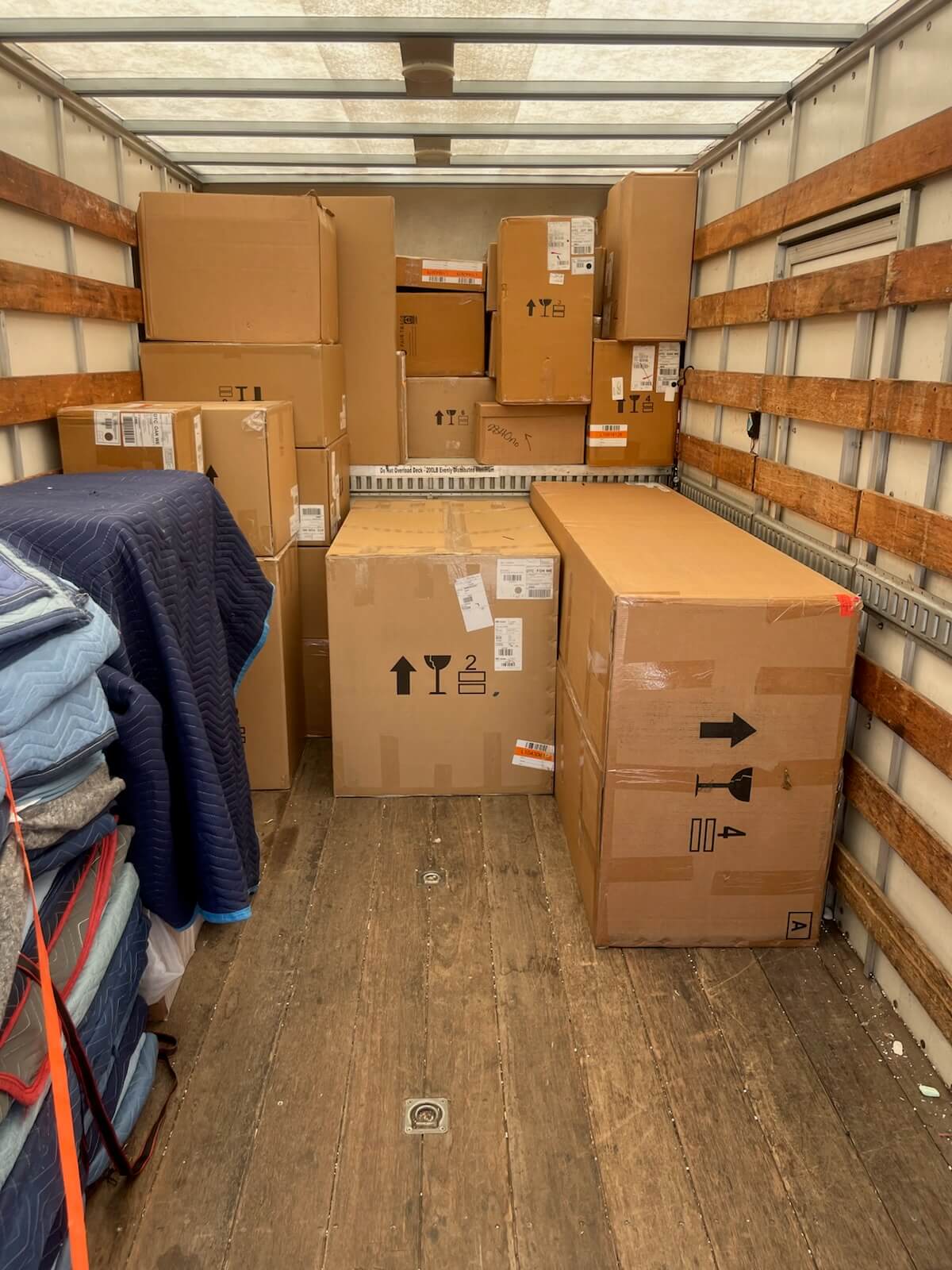
Once the heavy container safely reaches the flat truck bed, wheel it toward the front wall of the cargo area. Keeping heavy objects near the front axle improves the overall handling of the moving truck. Carefully lower the container off the dolly and onto the flat floor.
Securing the Load for Highway Transport
Your work is not finished just because the container is inside the truck. You must secure the massive object to the interior truck walls. Use multiple heavy duty ratchet straps to bind the steel unit tightly against the sturdy wooden rails of the cargo compartment.
Wrap additional moving blankets around the container to prevent any friction damage during the bumpy highway ride. If you’re also clearing out unwanted items during your move, consider professional junk removal services to reduce clutter and lighten your load. The straps must be tight enough that the heavy unit cannot rock back and forth. Even a small amount of movement can cause the straps to eventually loosen.
Drive the moving truck with extreme caution. The additional weight of the heavy steel vault will drastically change how the vehicle brakes and corners. Leave plenty of following distance between your truck and other vehicles. Avoid any sudden lane changes or aggressive steering maneuvers on the highway.
Unloading and Final Placement Techniques
Unloading the heavy steel container requires the exact same level of focus as the initial loading phase. You must safely lower the loaded dolly down the metal ramp without losing control. The operator holds the handles firmly while helpers push back slightly to slow the descent.
Carefully navigate the container through your new home toward its final destination. Use thick plywood sheets to protect delicate hardwood or tile floors from the heavy dolly wheels. Roll the unit slowly to prevent any deep scratches or cracked ceramic tiles along the new pathway.
Once you reach the final designated spot, gently lower the steel unit off the dolly platform. Remove all protective blankets and carefully peel away the plastic stretch wrap. Finally, unlock the heavy steel door and begin the long process of reloading your interior adjustable shelves and valuables.
Recognizing When to Hire Professional Assistance
Some massive steel vaults are simply too heavy and dangerous for inexperienced homeowners to manage. If your container weighs more than a few hundred pounds, you should seriously consider hiring experts. Professional teams possess the necessary specialized equipment and vast physical experience to handle extreme loads safely.
Searching online for How to Move a Gun Safe Safely and Securely | Scott Family Expediting will show you exactly how professionals manage these incredible risks. Experienced crews know how to navigate tight residential spaces without causing any structural damage. They eliminate the terrible stress of the heavy lift entirely.
You might read an extensive overview like Master how to move a gun safe with our expert guide. Learn the best techniques, tools, and safety tips for transporting heavy safes with Scott Family Expediting. After reading, many homeowners realize the extreme physical demands are simply too great to tackle alone.
Reviewing Common Mistakes to Avoid
One major mistake is leaving heavy items inside the container during the transition. Many people assume they can save time by leaving ammunition boxes inside. This completely unnecessary weight makes the balancing process much harder. Always prioritize total weight reduction before attempting any heavy residential lifting.
Another frequent error is wearing inappropriate footwear during the physical labor phase. Sneakers or sandals offer zero protection if the heavy steel edge slips off the dolly platform. Steel toe boots are an absolute requirement for protecting your vulnerable toes from severe crushing injuries during the process.
Finally, failing to communicate clearly causes numerous terrible accidents. If a helper feels their grip slipping, they must yell out immediately. The entire team must stop and stabilize the load before the person regains their strong grip. Silent struggle always leads to disastrous drops and injuries.
Maintaining Safety During the Entire Process
Physical exhaustion is a very real threat during this demanding task. You must take frequent water breaks to keep your muscles functioning properly. Do not try to rush the job just to get it finished quickly. Fatigue leads to poor judgment and dangerous physical mistakes.
If the massive steel vault begins to tip over and you cannot easily stop it, you must let it fall. Do not risk breaking your limbs trying to catch hundreds of pounds of falling steel. Property damage is easily repairable, but a crushed spine is totally permanent.
Always stretch your back and legs thoroughly before beginning the heavy physical labor. Proper warm up exercises prepare your muscles for the extreme strain of tilting and pushing the heavy appliance dolly. Taking five minutes to stretch can easily prevent a severely pulled lower back muscle.
Dealing With Extreme Weather Conditions
Relocating massive steel items during terrible weather introduces completely new physical dangers. Heavy rain turns wooden ramps into incredibly slippery hazards. You must thoroughly dry all metal ramps and wooden pathways before attempting to push the loaded appliance dolly across these slick outdoor surfaces.
Snow and ice require even more intense preparation before the move. You must shovel the entire pathway and lay down thick layers of coarse rock salt. If the exterior conditions remain too icy, you must delay the heavy transit project until the dangerous frozen weather completely passes.
Extreme heat also causes serious problems for the moving team. Helpers will sweat profusely, making it difficult to maintain a strong grip on the dolly handles. Take frequent water breaks in the shade and wear breathable clothing to prevent dangerous heat exhaustion during the intense physical labor.
Inspecting Your Steel Vault After Transit
Once the heavy unit rests completely flat in the new location, perform a thorough exterior inspection. Look closely for any deep scratches or strange dents along the painted steel surface. If you hired a professional team, point out any unexpected new damages to the designated crew leader immediately.
After checking the painted exterior, carefully test the locking mechanism. The internal lock tumblers can sometimes shift during a particularly bumpy highway ride. Slowly turn the dial or punch in your electronic code to ensure the heavy steel bolts retract smoothly without any strange grinding noises.
If the heavy door feels stiff or the lock refuses to open, do not force the handle. You could permanently snap the internal locking pins. Contact a certified locksmith who specializes in heavy security vaults to safely diagnose and repair the jammed internal locking components.
Final Thoughts on Heavy Residential Relocations
Successfully completing this massive physical project requires extreme dedication and precise teamwork. You must never underestimate the sheer danger of moving hundreds of pounds of solid steel. Careful planning and excellent communication will protect both your beautiful home and your essential physical health during the process.
We hope this comprehensive guide provided valuable insight into the complicated relocation process. Understanding the necessary physical mechanics prepares you for the demanding road ahead. Always prioritize personal safety over rushing the job, and remember that asking for professional help is always a brilliant decision.
Take your time measuring doors and securing the heavy duty ratchet straps. Use the correct appliance dolly and always rely on strong spotters. By following these strict safety guidelines, your massive steel container will reach its final destination without causing any terrible accidents or property damage.
Protect Your Arsenal During Your Next Transition
Scott Family Expediting has delivered trusted local relocations for years. We handle meticulous packing, secure loading, and precise placement for every transition—including specialized furniture delivery services for heavy and valuable items. Our dedicated crews specialize in navigating heavy vaults down narrow staircases without a single scratch. Lock in your specialized heavy transit plan by dialing 805-263-5450 right now.


Frequently Asked Questions
Start by completely emptying the unit. Removing firearms and shelves greatly reduces the weight. This makes balancing the heavy container easier on your dolly. Always wear thick gloves and strong footwear to prevent injuries while transporting the heavy object across floors.
You need a heavy appliance dolly rated for extreme weight capacity. Thick moving blankets and ratchet straps are essential to protect the finish. Sturdy work gloves keep your hands safe during the physical lift and careful transport across the room.
It is never recommended to attempt this task by yourself. These containers weigh hundreds of pounds and require at least three strong adults to navigate safely. Hiring professionals ensures no one gets hurt and your property remains totally undamaged.
Yes, staircases pose the greatest risk. You must go slowly one step at a time while keeping the heavy unit tilted back on the dolly. Having spotters provides crucial balance. If the path feels too dangerous, immediately hire trained relocation experts.
Preparation usually takes an hour. Securing the unit onto the dolly requires thirty minutes of careful work. Transport time depends entirely on your home layout and the stairs involved. Rushing this precise process greatly increases injury risk.
.png)
Ready to book your move?
Get a free quote or talk with our team to walk through your move, ask questions, and schedule a time that works best for you.
.png)